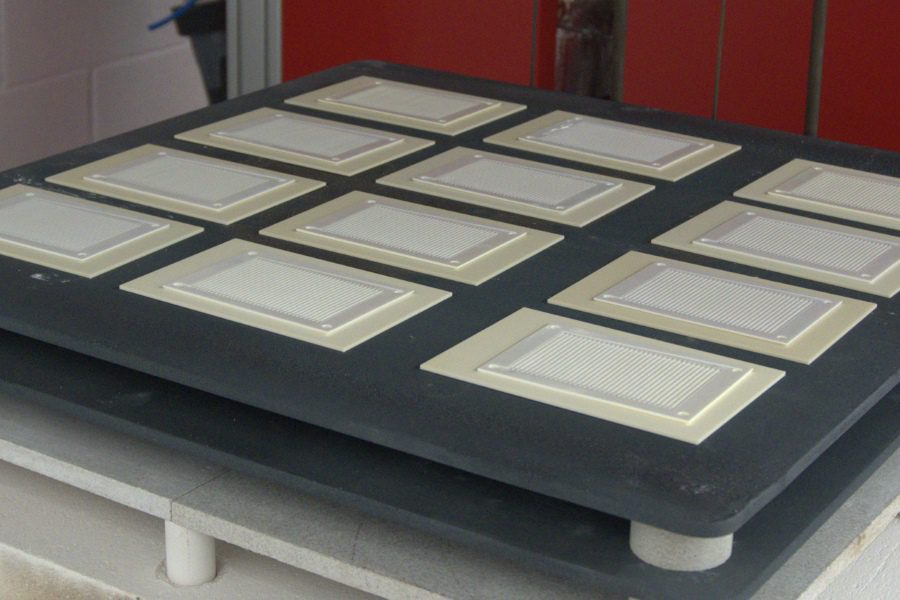
According to IREC, only a limited number of organizations worldwide currently produce this type of cell, which the institute highlights for its high efficiency compared to competing technologies. By applying 3D printing of functional ceramics, Merce Lab has become the first laboratory to use this approach for SOC manufacturing.
IREC also notes that 3D printing offers several advantages, including design flexibility, efficient material use, and significant reductions in device weight and volume, helping to raise the energy density of final systems. These characteristics are described as particularly useful for transport applications and for storing renewable energy through hydrogen production.
The technology pathway spans several stages, from the preparation of basic components to cell stacking and validation. This configuration aims to support technology transfer and foster new business models intended to accelerate the industrialization of renewable hydrogen. The initiative forms part of Tecnopropia, a ~€25 million IPCEI hydrogen project led and co-funded by H2B2 through Spain’s PRTR program. The pilot line received an initial investment of €2 million and is additionally financed by projects such as CLEANHYPRO, HYP3D, COMECOCO2, and H2SHIFT.
“This facility positions us as pioneers in SOC manufacturing at a global scale,” said Marc Torrell, head of Merce Lab at IREC.
“This is a disruptive approach to manufacturing processes and performance of ceramic-based devices, opening the door to new SOC systems for applications that previously could not meet desired requirements, such as maritime or aviation transport,” he added.
IREC has already produced its first complete devices in the new laboratory and is establishing collaborations with companies including H2B2, 3Dceram, AMES, Viver Clean Tech, AESA, Nano4Energy, and M-reformer. The organization also plans to create Oxhyd Energy, a spin-off focused on commercializing SOC fuel cells.