
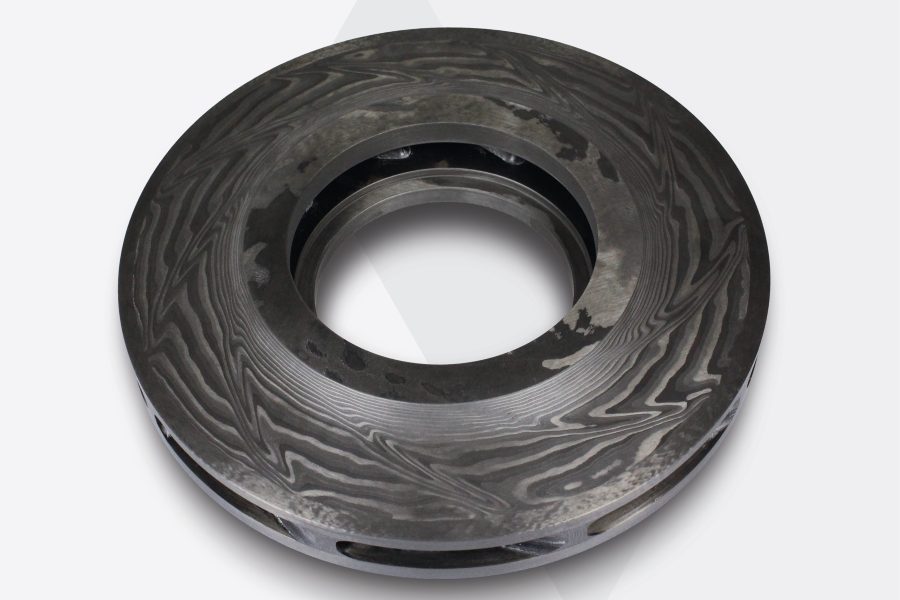
The company has achieved a new milestone in hydrogen compression technology with the development of a composite closed impeller that reached a tested tip speed of 688 m/s. The company said the result is nearly double the operating limits of conventional metallic impellers and establishes a new benchmark for centrifugal compressors used in hydrogen pipelines.
Hydrogen transport through pipelines relies on large centrifugal compressors to maintain pressure. Traditional metallic impellers typically reach burst limits of about 360 m/s for closed designs and 500 m/s for open designs, constraining compression ratios for light gases such as hydrogen. These limitations often require additional compressor stages, increasing system size, capital cost, and maintenance requirements.
According to the company, the new impeller was designed to address these constraints as demand for hydrogen infrastructure accelerates, particularly in Europe, where tens of thousands of kilometers of hydrogen pipelines are planned by 2040. Higher-speed impellers can enable fewer compressor stages, potentially reducing overall system complexity and cost.
“Greene Tweed began developing its composite closed impeller in 2020, leveraging the high specific strength and temperature resistance of carbon fiber reinforced PEEK (C/PEEK),” said Samuel Stutz, Technology Manager at Greene Tweed. “Our goal was to create a design that could exceed 600 m/s tip speed for compressing light gases like hydrogen.”
Stutz added that after three development and testing cycles, the impeller surpassed its original performance target. “The impeller achieved a tip speed of 688 m/s, far exceeding the project’s original target and setting a new industry benchmark,” he said.
The company stated that the composite impeller is up to five times lighter than metallic alternatives and offers roughly three times the strength-to-weight ratio. Greene Tweed said these characteristics support higher operating speeds and improved compression efficiency.
“We aim to revolutionize hydrogen infrastructure by breaking past the limitations of metals,” said Magen Buterbaugh, President and CEO of Greene Tweed. “We are now collaborating with centrifugal compressor OEMs to bring this technology to real-world applications.”