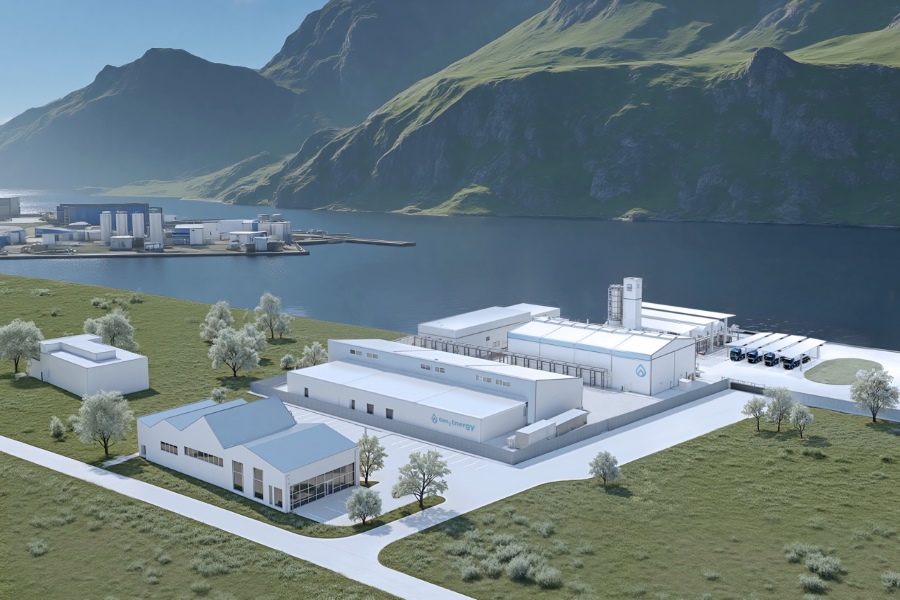
Of the total reserved capacity, 87 MW has been allocated within the existing power grid. The remaining capacity is subject to planned grid development across the Helgeland region in northern Norway, a process in which Statnett, Norway’s state-owned electricity transmission system operator, plays a key role.
The reservation provides sufficient power for the first phase of the facility, which is designed to produce up to 30 tonnes of liquefied green hydrogen per day. Production is planned to be scaled up over time toward the project’s full capacity of 195 MW. The hydrogen is intended for use as a zero-emission fuel, including applications in the maritime sector, supporting reductions in CO₂ emissions.
“This is an important milestone for Gen2 Energy and for the Mosjøen project,” said Lena Halvari, Chief Executive Officer of Gen2 Energy. “We have worked in a focused and systematic manner over time to reach this point, and the capacity reservation provides the predictability we need to move the project forward towards a final investment decision and construction start.”
“The project and the facility will contribute to emission reductions and local value creation, both during construction and once the plant is in operation,” she added.
Halvari emphasized the role of hydrogen in maritime decarbonization: “To succeed in reducing emissions in the maritime sector, green hydrogen must be made available at scale. The capacity reservation at Nesbruket is an important step in that direction.”
Significant development work has already been carried out at the Nesbruket site. The overall project in the Helgeland region will be developed and built in phases and is expected to generate increased activity, new jobs, and further industrial development in northern Norway.
Gen2 Energy is developing multiple hydrogen projects along the Norwegian coast and has a total portfolio of 995 MW. The company is working to establish a complete hydrogen value chain, primarily targeting the maritime sector, with the potential to contribute to emission reductions in Norwegian shipping and support Norway’s and the EU’s climate targets.